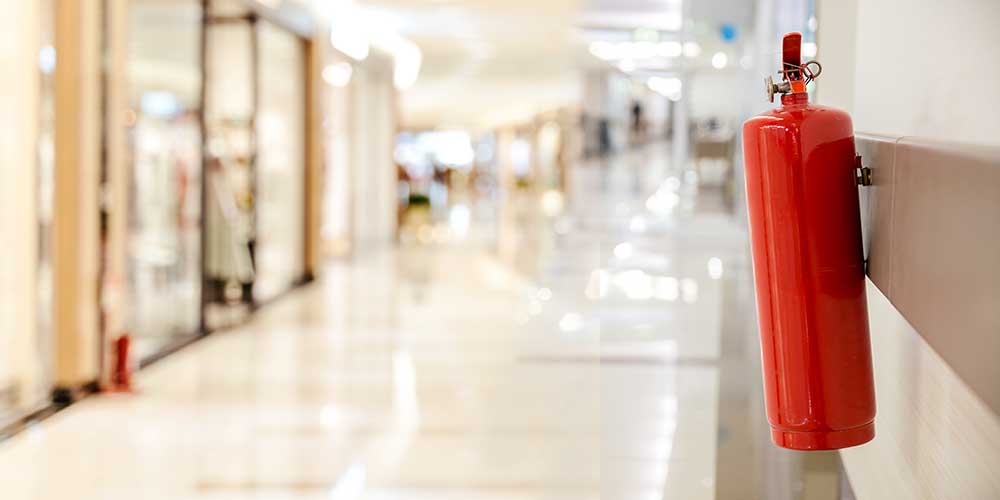
A New Jersey appellate court has upheld a nearly $1.8 million jury verdict against Walmart after a shopper was injured by a fire extinguisher that fell from a column-mounted harness, finding sufficient evidence the retailer, Walmart, had notice of the hazard.
The decision reflects principles routinely applied in Pennsylvania premises liability litigation, where commercial property owners are expected to identify and correct foreseeable risks in customer areas.
The ruling carries practical significance for retail injury claims across Northeast Pennsylvania, including cases litigated in courts serving Scranton, Wilkes-Barre, and surrounding Counties.
The case stems from a 2018 incident in which customer Peter Krassner was injured after lightly brushing against a fire extinguisher that dislodged and fell on his foot. He later developed complex regional pain syndrome, a chronic condition often associated with significant long-term impairment.
A Somerset County jury found Walmart 80% liable and awarded approximately $1.754 million in damages following a retrial. On appeal, Walmart argued the plaintiff failed to prove notice of any dangerous condition. The appellate panel rejected that argument, citing testimony that the extinguisher’s mounting straps were warped and could be disengaged with unusual ease, a defect a reasonable inspection would have revealed.
Evidence showed the retailer kept replacement mounting brackets due to recurring wear issues, allowing the jury to infer awareness of an ongoing safety risk. The court also emphasized that placement of the extinguisher on a column in a customer walkway could be viewed as a condition created by the retailer, eliminating the need for separate proof of notice.
Pennsylvania courts frequently analyze similar issues in claims involving falling fixtures, unsecured displays, and deteriorated safety equipment in commercial settings. The adequacy of inspection protocols and maintenance practices often determines liability.
Safety equipment can itself create liability when installed in high-traffic areas without adequate safeguards. Retail environments involve predictable customer contact with structural features and displays. Where fixtures are placed within those paths, businesses are expected to ensure mounting systems remain secure over time.
The appellate court’s reliance on model jury instructions addressing conditions created by the defendant underscores the legal weight given to store design and risk allocation decisions. Comparable disputes arise regularly in Pennsylvania litigation involving warehouse retailers and large commercial properties.
The nature of the plaintiff’s injury influenced the damages outcome. Complex regional pain syndrome can lead to prolonged disability, intensive medical treatment, and permanent functional limitations. Pennsylvania courts recognize such conditions as compensable when supported by credible medical evidence and causally linked to negligent conditions. From a trial perspective, cases involving chronic pain diagnoses often hinge on expert testimony and long-term care projections, increasing verdict exposure.
Retail injury cases against stores like Walmart, Dick’s Sporting Goods, Lowe’s and Home Goods remain among the most common premises liability claims in Pennsylvania. Incidents involving falling objects or unsecured fixtures often turn on whether a business implemented reasonable inspection and maintenance procedures.
Appellate decisions like this illustrate how courts evaluate notice, foreseeability, and corporate responsibility in commercial injury litigation. At Anzalone & Doyle Trial Lawyers, we closely monitor developments in personal injury appellate law because they define how negligence claims are evaluated in real cases. Decisions like this reinforce a straightforward principle: Preventable hazards in routine retail settings can produce substantial legal exposure when safety risks are not addressed.
The team of experienced personal injury attorneys at Anzalone & Doyle Trial Lawyers represent individuals and families throughout Pennsylvania harmed through no fault of their own. If a retailer’s negligence resulted in you or a loved one being injured, our attorneys are available to help you understand your legal options.
Let The Team At Anzalone And Doyle Fight For You.
Why is it important to submit our Free Case Review form?
Submitting our web form regarding your personal injury case is a critical first step that initiates the legal process, allowing our experienced attorneys to immediately review the merits of your claim and start preserving crucial evidence before it is lost. By providing detailed information about the incident, your injuries, and the parties involved, you enable our legal professionals to quickly assess liability and estimate the potential value of your case. Furthermore, this prompt,, secure, and convenient method of communication ensures that essential details are captured accurately, helping to prevent insurance companies from devaluing or denying your claim due to gaps in documentation. Ultimately, taking this proactive step helps protect your rights and increases the likelihood of securing maximum compensation for medical expenses, lost wages, and pain and suffering.